


supercharging a 3000gt


Thread Starter
|
Senior Member
Joined: Feb 2007
Posts: 138
From:
 supercharging a 3000gt
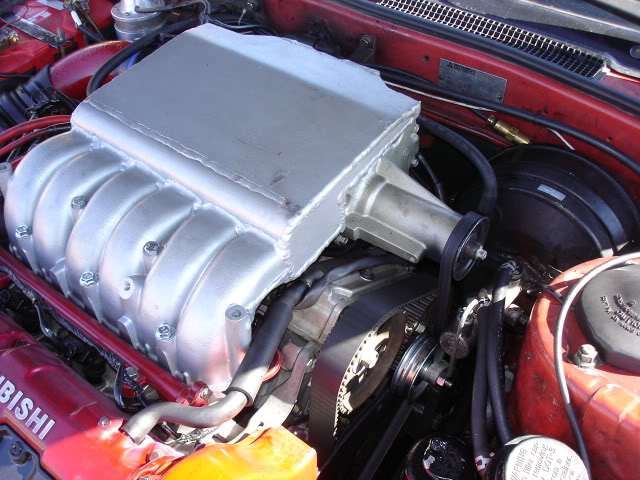
does anyone know anything about supercharging a 3000gt? my dad doesn't want me to get a turbo because of the additional expenses, intercool, bov, etc. my friend told me that with a supercharger, an intercooler isnt necessarily needed. what are the similarities and differences between turbocharging and supercharging a 3000gt?

Joined: Oct 2006
Posts: 306
From:
RE: supercharging a 3000gt
supercharging can be just as dangerous and expensive as turboing sometimes. i know that with that block you have you will not be able to run high boost. i know someone who was trying to make the fastest stratus in the nation, and when he ran full boost on his supercharger, he blew the engine. i think there was a thread about this on here somewhere. it's definately on the 3000gt section, but its here.

Joined: Jan 2007
Posts: 22
From:
RE: supercharging a 3000gt
well the money that you supposedly are going to save on going with a supercharger instead of aturbo you are going to spend it on the custom work that needs to be done.
if i was in your position of trying to gain more power i wound do a tt conversion because is easier than a customsupercharger, and all of the tt parts bolt up to your engine already. and you can complete a tt conversion for less than $2000 if you shop around for parts.IMO
if i was in your position of trying to gain more power i wound do a tt conversion because is easier than a customsupercharger, and all of the tt parts bolt up to your engine already. and you can complete a tt conversion for less than $2000 if you shop around for parts.IMO
Joined: Oct 2006
Posts: 306
From:
RE: supercharging a 3000gt
true that. that guy with the strats spent about 15k on custom internals he needed to complete the project. mind you this is only a work in progress. he is yet to be the fastest stratus in the nation. its cool for him bc who would ever think of making starus into a 10 second car or something like that, you know. there is more information on tt conversions in this site, and more people have done it successfully, so you know that if you do the tt conversion its not going to crap out on you in a year or less.



Joined: Jan 2007
Posts: 716
From:
RE: supercharging a 3000gt
superchargers run hotter than turbos, oddly enough.
Turbos, almost always make more power with the same amount of boost (due to the issue above)
They are also most times cheaper, and are easier to tune, due to the fact that there are more ways to control one.
I understand your dads concerns. What I would suggest is taking your time, and doing alot of extra studing on the subject,
Knowledge cant hurt you.
Turbos, almost always make more power with the same amount of boost (due to the issue above)
They are also most times cheaper, and are easier to tune, due to the fact that there are more ways to control one.
I understand your dads concerns. What I would suggest is taking your time, and doing alot of extra studing on the subject,
Knowledge cant hurt you.
Joined: Jan 2007
Posts: 716
From:
RE: supercharging a 3000gt
yes, and thats due to compressor effeciency, as well as heat.
5lbs of boost plus 14.7lpsi of atmosperic pressure that is the standard anywhere in the world, and is what 1bar of boost is rated at still equals 19.7psi, no matter what you areusing to get it there.
10lbs of boost is the same on a turbo as 10lbs of boost is on a centrifugal, or rootstype blower.
Itmatter what, you are still going to be forcing 24.7psiinto your motor. (at 10psi of boost)
The problemlies in thatheat the air more in a supercharger than you do in a turbo (funny i know)
Superchargers work at very low compressor effeciency, with the absolute best you areevergoing to getbeing about 60-65% effeciency,
Turbos however experience alot lessturbulance, and since the air they are moving doest have to be compressed in the unit (rather compressed through the piping and intercooler (if there is one) then that air doesnt move back across the turbo to slow it down,
Roots type superchargers (regardless of whether itsan eaton, whipple, or lysholm) all usebasically an air resovor chamber with two big fat/long blad fans spinning either in the same direction, or across it. They rely on the small gap in between the blades to compress the air, and shoot it back out. However since most of the time they are bolted directly to the head, or have very little piping, it just doesntleave anywhere for the air to go, except to stumble back around, andstay inthe chamber, until the throttle body opens, and it can flow into the cylinders. Because of this, the air in the supercharger canconinue on its cycle inside the unit, and get re-heated, as it tries to re-compress, which only equates to lesshp, as we all know heat makes less power than cool.
As for Centrifugal superchargers, they are generally where you are going to find thehigher compressor effeciency numbers, as superchargers go, (typically closer to 65%) However there main problem is that unline a supercharger, they require something to drive them off of the engine, and whateveris used todrive them, takes power away from the motor at the same time the supercharger adds it.Centrifugal superchargers have very similar boost charicteristics to turbos, however becauseall of the boost perameters are set at the design stage with gearing choices, then there is no other way tomake more boost, without a smaller pulley. Whereturbos only require a turn of a dial, or at worst, loosening a screw and turning an intergrated wastegate actuator controlarm father in. Centrifigal superchargers have a limit. They spinvery fast, and have little tolerance for being spun any faster. Not only that,if you decide you want moreboost than the unit is capable of,often times the only option is to replace the whole unit. Which leads to horrible long lag times as the unit moves to a speed that it can become usefull.
Turbos on the other hand have none of those problems, astheycan, andfor the most part are designedso that theturbine side is smaller than the compressor side, so that it spins up alot faster than the compressor. The reason for this is so that you can have your lotsaboost, and so that you dont have long lag times.
Dont get me wrong, turbos definatly heat the air there fair share, but it is considerable less than any supercharger ever will. Also, intercoolers do alotto be able to chill thatair back down to almostambent temps.
and just for the record, turbos have compressor effeciency typically around 75 to 80%
so yes, you are right, but no you are wrong.
5lbs of boost plus 14.7lpsi of atmosperic pressure that is the standard anywhere in the world, and is what 1bar of boost is rated at still equals 19.7psi, no matter what you areusing to get it there.
10lbs of boost is the same on a turbo as 10lbs of boost is on a centrifugal, or rootstype blower.
Itmatter what, you are still going to be forcing 24.7psiinto your motor. (at 10psi of boost)
The problemlies in thatheat the air more in a supercharger than you do in a turbo (funny i know)
Superchargers work at very low compressor effeciency, with the absolute best you areevergoing to getbeing about 60-65% effeciency,
Turbos however experience alot lessturbulance, and since the air they are moving doest have to be compressed in the unit (rather compressed through the piping and intercooler (if there is one) then that air doesnt move back across the turbo to slow it down,
Roots type superchargers (regardless of whether itsan eaton, whipple, or lysholm) all usebasically an air resovor chamber with two big fat/long blad fans spinning either in the same direction, or across it. They rely on the small gap in between the blades to compress the air, and shoot it back out. However since most of the time they are bolted directly to the head, or have very little piping, it just doesntleave anywhere for the air to go, except to stumble back around, andstay inthe chamber, until the throttle body opens, and it can flow into the cylinders. Because of this, the air in the supercharger canconinue on its cycle inside the unit, and get re-heated, as it tries to re-compress, which only equates to lesshp, as we all know heat makes less power than cool.
As for Centrifugal superchargers, they are generally where you are going to find thehigher compressor effeciency numbers, as superchargers go, (typically closer to 65%) However there main problem is that unline a supercharger, they require something to drive them off of the engine, and whateveris used todrive them, takes power away from the motor at the same time the supercharger adds it.Centrifugal superchargers have very similar boost charicteristics to turbos, however becauseall of the boost perameters are set at the design stage with gearing choices, then there is no other way tomake more boost, without a smaller pulley. Whereturbos only require a turn of a dial, or at worst, loosening a screw and turning an intergrated wastegate actuator controlarm father in. Centrifigal superchargers have a limit. They spinvery fast, and have little tolerance for being spun any faster. Not only that,if you decide you want moreboost than the unit is capable of,often times the only option is to replace the whole unit. Which leads to horrible long lag times as the unit moves to a speed that it can become usefull.
Turbos on the other hand have none of those problems, astheycan, andfor the most part are designedso that theturbine side is smaller than the compressor side, so that it spins up alot faster than the compressor. The reason for this is so that you can have your lotsaboost, and so that you dont have long lag times.
Dont get me wrong, turbos definatly heat the air there fair share, but it is considerable less than any supercharger ever will. Also, intercoolers do alotto be able to chill thatair back down to almostambent temps.
and just for the record, turbos have compressor effeciency typically around 75 to 80%
so yes, you are right, but no you are wrong.

Thread
Thread Starter
Forum
Replies
Last Post
mandodelpatio
Nitrous, Super Chargers, & Turbos
0
Dec 10, 2012 05:18 PM
xi8883
For Sale / Trade
0
Oct 4, 2010 09:13 AM
bigredpajero
Nitrous, Super Chargers, & Turbos
0
Jul 2, 2007 02:21 AM
